ICE arrests spiked in Santa Fe in August. What changes for a family’s immigration psychological evaluation?
An ICE arrest does not change who we evaluate in a hardship case, and it does not stop the evaluation. The qualifying relative, the U.S. citizen or lawful permanent resident spouse, parent, or child, is the person interviewed, over secure video, from wherever they are. What changes is the clinical picture. Hardship the family had been anticipating is now being lived, and the report documents both. When a detention moves a case into immigration court, the same relatives are evaluated against the higher standard that cancellation of removal requires.
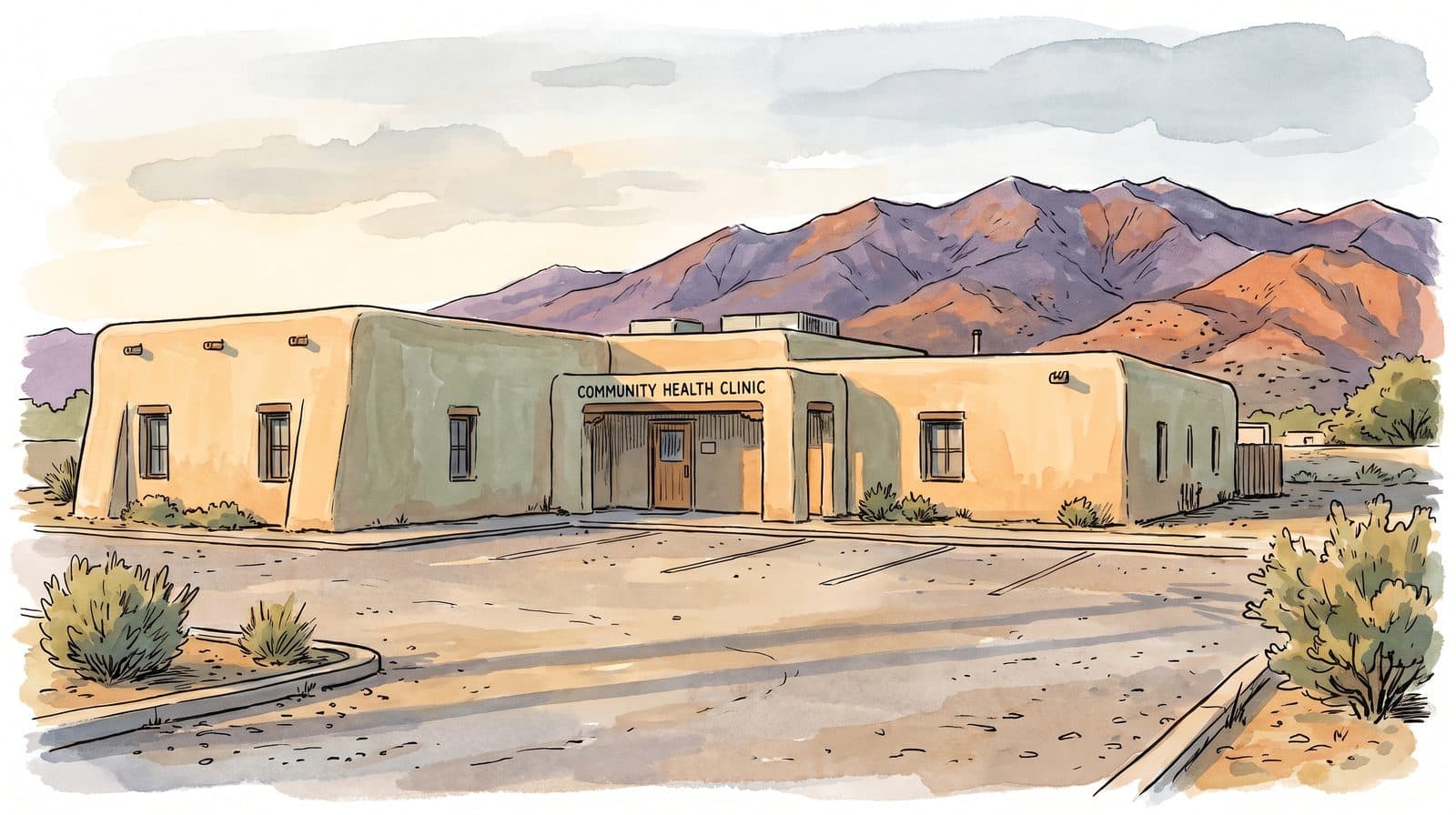
What happened in Santa Fe and Albuquerque
On Wednesday, August 19, 2026, ICE agents arrested a parent in the parking lot of La Familia Medical Center on Alto Street in Santa Fe, after following him and his daughter from their home to a morning appointment. The clinic confirmed that agents stayed in the public lot and did not enter the building. It was one of several arrests in the city that day. The Santa Fe New Mexican reported at least five in Santa Fe on the Wednesday alone, and immigration attorney Allegra Love told the paper she had been alerted to at least eight across Santa Fe and Española between Sunday and Wednesday morning. By the end of the week, Searchlight New Mexico put the count at more than a dozen since the Sunday.
On August 27, New Mexico in Focus on NMPBS ran a segment on the increase and a full interview with Love, who practices in Santa Fe with Las Cumbres Community Services and the county. In the interview she sets the week against what her office was seeing earlier in the year, one to three detentions a month in Santa Fe County, and describes the pattern in the recent arrests: vehicle stops rather than warrants served at a door, and agents who ask for one person by name and then detain the driver who says he is not that person. The same episode carries a news conference at El Centro de Igualdad y Derechos in Albuquerque, where a city councilor and a Bernalillo County commissioner described the same rise in their city and a volunteer read accounts from two families whose relatives had been detained the week before.
The local numbers sit inside a national one. ICE arrested 49,571 people in July 2026, the highest monthly total of the current administration and a 15 percent increase over June, according to agency data reported by the Associated Press.
What an arrest changes for the evaluation, and what it does not
Start with what does not change. In an I-601A or I-601 hardship waiver, in cancellation of removal, and in an I-212, the person we evaluate is the qualifying relative: the U.S. citizen or lawful permanent resident spouse, parent, or child. That person is not in custody. The interview runs over secure video, from a kitchen table in Santa Fe or Las Cruces or anywhere else in the country, and the standardized instruments are administered in the same session. A detention does not put the evaluation out of reach. It usually makes the attorney want it sooner.
What changes is the clinical question. Before an arrest, a hardship evaluation documents anticipatory hardship: what the relative expects to lose, how they are functioning while the case is pending, what the prospect of separation is already doing to their sleep, their concentration, their health, and their work. After an arrest, part of that future has arrived. The spouse is now the only income and the only parent at home. The child is missing school, as one Santa Fe organizer told Searchlight New Mexico. The evaluation records both: the separation being lived now, with its measurable effects, and the permanent separation the case turns on. The PHQ-9, the GAD-7, and, where trauma is indicated, the PCL-5 give those effects a number the adjudicator can set against published cutoffs, and the clinical interview gives them a timeline.
The forum can change too. A family in the middle of an I-601A provisional waiver was, until the arrest, on a USCIS timeline. A detention can place the family member in removal proceedings before an immigration judge, where the relief the attorney may seek is cancellation of removal, and the hardship standard is higher: exceptional and extremely unusual hardship to the qualifying relative, rather than the extreme hardship of the waiver. The relatives are the same people. The report is written to the standard the case is now under, and the attorney tells us which one that is.
One more thread from the interview belongs here because it touches a case type we evaluate. Love describes her client from the La Familia arrest as holding U nonimmigrant status, granted in 2022, with a green card application pending. U status exists for victims of certain crimes who have cooperated with law enforcement, and USCIS grants it only after its own vetting of the applicant. A U-Visa application can include a psychological evaluation documenting the harm the crime caused, and that is one of the evaluations this firm provides. We have no role in the case in the interview and no opinion on it. We mention the status because families in New Mexico who hold it, or are applying for it, are asking what this month means for them, and that question belongs to their attorney.

Preparation before a crisis, and where the evaluation fits
The most useful part of the interview for families is the distinction Love draws between rapid response and what she calls slow response. A hotline that documents an arrest as it happens does necessary work, and it rarely stops the arrest. Slow response is the work done in advance: a power of attorney so a trusted adult can make medical and school decisions for a child, the birth certificates and passports in one folder, and a relationship with a lawyer that exists before anyone is in a detention center. Those pieces belong to the attorney and to community organizations, and Santa Fe has both.
The evaluation is the piece of the eventual file we can speak to. It does not depend on the rest of the legal package being finished. It depends on access to the qualifying relative and whatever records exist, and it is stronger when it is scheduled with time rather than ordered against a hearing date. Standard turnaround is 5-7 days from the interview to the co-signed report. Rush service adds $300 for 72 hours, $500 for 48 hours, or $900 for 24 hours to the case base fee, subject to availability. Hardship waiver evaluations start at $750, cancellation of removal at $1,200, and U-Visa at $1,000. The exact fee is confirmed in writing before we begin.
Where our lane ends. We do not give legal advice. Whether an arrest changes the relief a family should seek, whether to file now or wait, what to say to an agent, and what a habeas petition can do are questions for the immigration attorney, and the ones in this story are being answered in court. What we provide is clinical evidence about the qualifying relative, in English or Spanish, addressed to USCIS or the immigration court, and co-signed by our clinical lead before it leaves the firm.
If a detention has moved a family you represent into immigration court, our cancellation of removal evaluation page covers the higher hardship standard, who is evaluated, and what the report returns to you. The hardship waiver evaluation for I-601A and I-601 cases follows the same process at the extreme hardship standard.
Related evaluations
Questions we are getting from New Mexico this month
- Can the evaluation go forward while my family member is detained?
- Yes. In a hardship case the person evaluated is the U.S. citizen or lawful permanent resident relative, who is not in custody. The interview runs over secure video and does not require anyone to travel. The detained family member is not interviewed for a hardship evaluation. In VAWA, U-Visa, and T-Visa cases the applicant is the person evaluated, and if that person is in custody, the evaluation depends on the access the attorney can arrange with the facility.
- Does Kipu Terra serve Albuquerque, Las Cruces, and the rest of New Mexico?
- Yes. We are based in Santa Fe and serve every part of New Mexico, and the rest of the country, by secure video. Interviews run in English or Spanish with the bilingual evaluator directly, so there is no interpreter cost in either language.
- How fast can an evaluation be done when a hearing date is close?
- Standard turnaround is 5-7 days from the interview to the co-signed report. A 72- or 48-hour expedited option and a 24-hour emergency option exist, subject to availability, and cost more. Tell us the date at the first contact so the case is scheduled and priced as an expedited one from the start.
Sources
- New Mexico in Focus, NMPBS, “ICE Activity Ramps Up; NM’s Early Dem Primary Slot,” aired August 27, 2026. Guests on the enforcement segment: Allegra Love, Stephanie Telles, Adriann Barboa, Aylin Chavez.Episode description: immigrant advocates and local government officials say they are seeing and hearing about increased federal immigration arrests in Santa Fe and Albuquerque in recent weeks.
- New Mexico in Focus, “Immigration Attorney Allegra Love on ICE Arrest Spike in Santa Fe,” the full interview, YouTube.
- The Santa Fe New Mexican, “La Familia: ICE agents make arrest at Santa Fe clinic lot,” Margaret O’Hara, August 19, 2026.Source for the time and place of the arrest, the clinic’s statement that agents did not enter the building, the at-least-five count for the Wednesday, and Love’s at-least-eight count for Sunday through Wednesday morning across Santa Fe and Española.
- Searchlight New Mexico, “‘We can’t allow this to happen’: Advocates decry recent spike in Santa Fe ICE arrests,” August 21, 2026.Source for the “at least a dozen” arrests since Sunday, August 16, and for the organizer’s remark about children going home without their parents and absences in schools.
- Associated Press via PBS NewsHour, “ICE arrests jump to nearly 50,000 in July, highest monthly total of Trump’s crackdown,” Rebecca Santana, August 25, 2026.“The July arrest tally of 49,571 marks a 15% jump from 43,021 arrests a month earlier.”
Disclosure. AI was used to create the two illustrative images on this page, and for nothing else on it. The embedded interview is New Mexico in Focus programming from NMPBS, shown here with a link to the original. Kipu Terra has no connection to the program, to the attorney interviewed, or to any case discussed in it.
General information about immigration policy and the psychological evaluation process. Not legal advice, and not a substitute for consultation with an immigration attorney.