USCIS rewrote its VAWA self-petition guidance in December 2025. What changed, and what does it mean for the psychological evaluation?
On December 22, 2025, USCIS replaced the entire VAWA chapter of its Policy Manual, effective the same business day for every pending and future I-360 self-petition. Officers now decide in their sole discretion what evidence is credible and what weight it gets, a self-petitioner must show she lived with the abuser during the qualifying relationship, and “extreme cruelty” is being read for severity. A psychological evaluation was never required for VAWA and still is not. What changed is what a survivor’s own statement is worth on its own, and that is the gap a documented, co-signed evaluation exists to fill.
What happened
USCIS announced the rewrite on December 22, 2025 under a headline about “rampant fraud.” Its numbers: I-360 self-petitions rose about 360 percent from fiscal year 2020 to 2024, male self-petitioners rose 259 percent, and parent self-petitioners rose 2,239 percent. The agency called those trends “alarming and unprecedented.” Policy Alert PA-2025-33 revised Volume 3, Part D of the Policy Manual in its entirety.
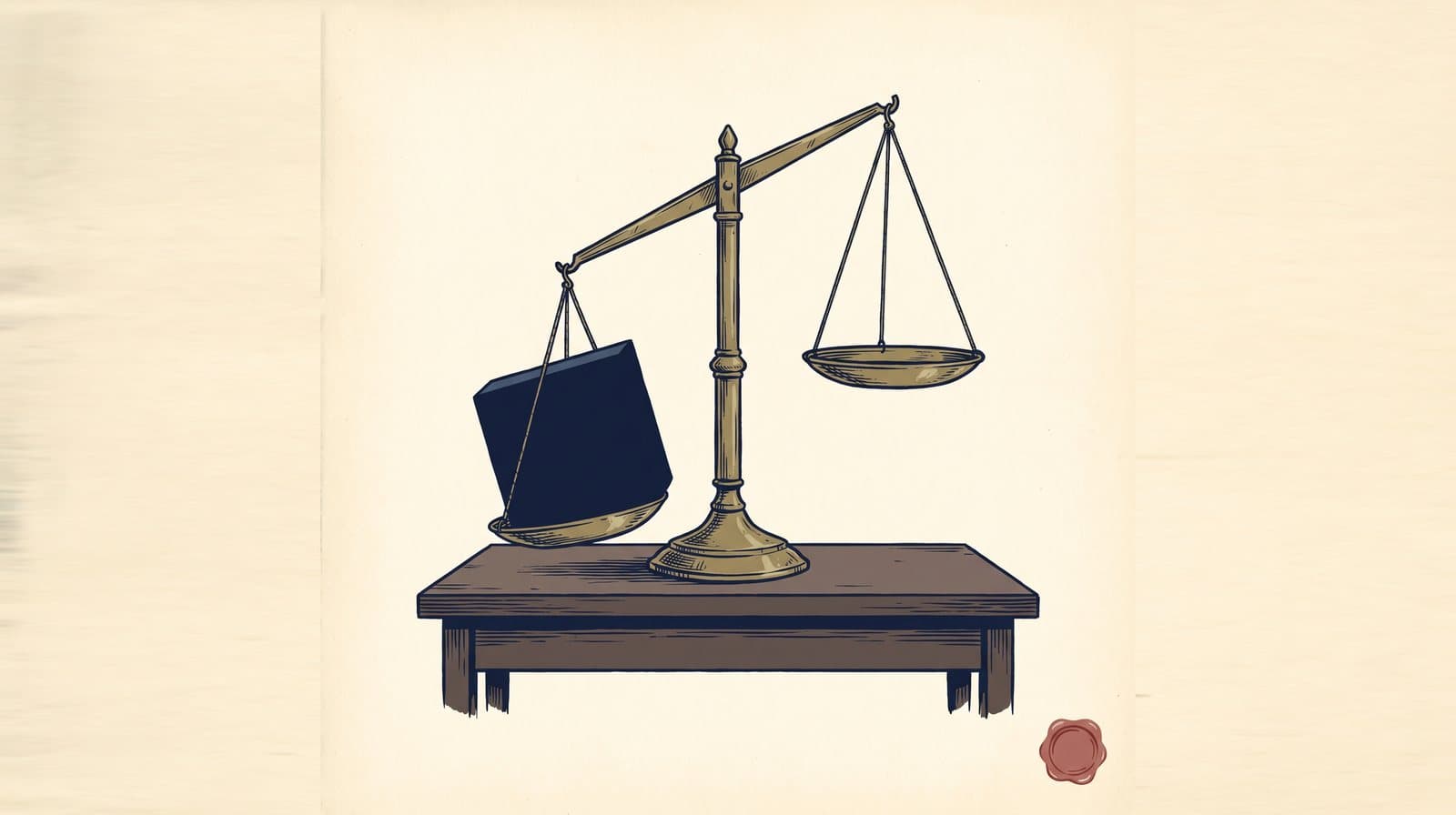
The change with the widest reach is about evidence. The alert restates that deciding what evidence is credible, and how much weight it gets, is “within the sole discretion of USCIS.” The Policy Manual still tells officers to consider any credible evidence. The ILRC’s March 2026 practice alert reads the new text as a move away from what it calls a survivor-centered lens: a declaration may carry less weight without “hospital reports, police reports, or records from a social worker or case worker,” and inconsistencies get weighed against what already sits in DHS databases. The line that USCIS would not deny a petition solely for missing good moral character evidence is gone. Attorney Patricia Elizee put the practical problem to CBS News in one sentence: “A lot of victims are not going to have access to phone records, or photos, or even a lease.”
Two eligibility rules moved as well. A self-petitioner must now show she resided with the abuser during the qualifying relationship, not at some point in the past. That reverses a February 2022 position, and the ILRC notes that visits to the abuser’s home while keeping a residence elsewhere will not satisfy it. A spouse must also establish a good-faith marriage with primary evidence: a valid marriage certificate, proof that every prior marriage ended, and bona fide evidence of the relationship.
“Battery or extreme cruelty” is being read differently too. The ILRC’s analysis is that the new guidance leans on dictionary definitions, with “extreme” meaning “existing in the utmost possible degree,” and lets officers use their own common sense on whether conduct clears that bar. USCIS’s own framing is that officers must look at “the motivation and the impact of the alleged harm, not merely the question of whether or not hurtful conduct occurred.” Severity, pattern, and effect are what an officer is now told to look for.
Advocates raised two further concerns in April 2026 reporting by Documented. Attorneys at Her Justice, ASISTA, and the Alliance for Immigrant Survivors said the guidance widens when USCIS may consider information from the abuser, without the independent corroboration that had been required since 1996, and they worry that leaving the physical address blank on the form could now count against a petition. Those are the advocates’ readings. How they play out in a given case is a question for counsel.
All of it applies to petitions that were already pending on December 22. USCIS wrote that it considered the reliance interests of those self-petitioners, found the changes “may adversely impact some self-petitioners,” and concluded that program integrity outweighed that. The May 21, 2026 adjustment-of-status memo we covered on July 30 treats a green card from inside the country as discretionary relief; the Wolfsdorf advisory on that memo lists VAWA-based adjustment among the categories left unaffected. Whether that holds for a particular file is the attorney’s call.
What changes for the evaluation
Nothing in the rewrite requires a psychological evaluation, and nothing in it names one. What changed is what a survivor’s declaration is worth standing alone. The guidance says a statement carries less weight without records around it, and in most of these cases there are no records, because abuse behind a closed door does not generate a police report. An evaluation is a record. It documents what she reported, what a clinician observed during the clinical interview, and what standardized instruments measured, with each statement traced to its source. That is the kind of evidence the guidance says it will weigh.
The severity reading changes how the report has to be written. The report does not argue that conduct meets the legal definition of extreme cruelty; that is the adjudicator’s question. It documents the pattern in specifics: the rule he set, the phrase he used, what she stopped doing, the money she was not allowed to touch, the threat to call immigration. In her words, attributed to her, in sequence. Adjectives do not survive a severity test. Details do.
The inconsistency reading is where we see the largest risk for survivors. The ILRC names it directly: a self-petitioner may be denied because trauma left her unable to remember every part of what happened. Non-linear recall, gaps in sequence, late disclosure, and a flat affect while describing violence are expected features of traumatic memory. A report that names them as clinically expected where they appear gives an adjudicator a reason not to read them as a credibility problem. We state the relationship between her presentation and what she reported in the Istanbul Protocol’s graded terms, consistent with or highly consistent with, and nothing stronger.
This is how our VAWA evaluation runs. A clinical interview by secure video follows our VAWA protocol, with questions paced to the survivor’s needs and breaks available. The clinician selects standardized measures for the person’s age, symptoms, language, and reported abuse. Scores are checked before use. We never contact the person she identifies as the abuser, and the report says why. Where collateral information is unavailable, the report documents the limitation and any known reason for it. Clinicians conduct interviews directly in English and Spanish. For French, Haitian Creole, Mandarin Chinese, and Portuguese, the firm coordinates and briefs a neutral professional interpreter through its language-service partners. Every diagnosis is mapped to DSM-5-TR criteria one by one, and two clinicians sign. The report offers no opinion on credibility, on eligibility, or on whether the account is true. An evaluator’s opinion on those questions carries no weight and reads as advocacy.
Timing and safety. Because the guidance reached pending cases, a petition filed before December 22 can draw a request for evidence under the new reading. An evaluation can be ordered at filing or in response to an RFE, and that call is the attorney’s. Our standard turnaround of 5-7 days runs from the point the case is evaluation-ready: safe contact set, any interpreter confirmed, counsel’s records in hand. All contact with the survivor goes through the route her attorney cleared, never through an address or phone the abuser can reach. A VAWA evaluation starts at $1,000, and the exact fee is confirmed in writing before we begin.
Where our lane ends. We do not give legal advice, and we do not offer opinions on eligibility, on whether conduct amounts to battery or extreme cruelty as a legal matter, on credibility, or on the fraud question USCIS raised. Those belong to the attorney and the adjudicator. What we provide is clinical evidence about the psychological impact of the abuse on the survivor, addressed to USCIS and co-signed by our clinical lead.
If you are an attorney preparing an I-360 self-petition under the new guidance and want to know what a VAWA evaluation documents and how the interview works, our VAWA evaluation page walks through the process, the instruments, and what we return to you.
Related evaluations
Questions we are getting on this
- Is a psychological evaluation required for a VAWA self-petition after the December 2025 changes?
- No. It was not required before, and the rewrite does not add it. Attorneys request one because the new guidance gives less weight to a declaration that stands alone, and a clinical report is often the only independent record of abuse that never produced a police report or a hospital visit. Whether to include one, and when, is the attorney’s decision.
- My I-360 was already pending on December 22, 2025. Does the new guidance apply to it?
- Yes. USCIS applied the update to every petition pending or filed on or after December 22, 2025, and said in writing that it weighed the effect on pending cases and proceeded anyway. What that means for a specific petition, including whether to supplement the record now or wait for a request for evidence, is a question for the attorney on the file. If an evaluation is part of the answer, we can schedule to either timeline.
Sources
- USCIS alert, “USCIS Restores Integrity to the VAWA Domestic Abuse Program After Finding Rampant Fraud,” December 22, 2025.“From fiscal years 2020 to 2024, the overall number of Form I-360 VAWA self-petitions increased by approximately 360% and male self-petitioners increased by 259%. These trends are alarming and unprecedented.” Also the source for the 2,239% parent figure and the December 22, 2025 effective date for pending and future requests.
- USCIS Policy Alert PA-2025-33, “Violence Against Women Act,” December 22, 2025, revising Volume 3, Part D of the Policy Manual in its entirety.“The determination of what evidence is credible and what weight to be given that evidence is within the sole discretion of USCIS.” Also the source for the residence-during-the-qualifying-relationship rule, the primary-evidence requirement for a good-faith marriage, the removed good-moral-character line, the “motivation and the impact of the alleged harm” framing, and the reliance-interests paragraph: the changes “may adversely impact some self-petitioners, but interests in program integrity ... outweigh any such reliance interests and retroactive impacts.”
- Immigrant Legal Resource Center, “Violence Against Women Act (VAWA): Recent Policy Manual Updates,” practice alert, March 2026.Source for the dictionary reading of “extreme” (“existing in the utmost possible degree”), the officer common-sense discretion, the declaration-versus-records weighting, the DHS-database inconsistency check, the visits-to-the-abuser’s-home residence point, and the trauma-memory denial risk: a denial may reach self-petitioners who “due to the trauma stemming from the abuse ... are unable to remember all aspects of the abuse they suffered.”
- Documented, “Changes to USCIS Policy Makes It Harder for Immigrant Survivors of Abuse to Get Visas, Green Cards,” Julia Malleck, April 20, 2026.Source for the adverse-party and physical-address concerns, attributed to attorneys at Her Justice, ASISTA, the Tahirih Justice Center, and the Alliance for Immigrant Survivors, and for the estimated backlog of about 180,000 VAWA petitions.
- CBS News Miami, “Trump administration tightens rules for VAWA immigration petitions, raising fears for survivors,” December 2025.Patricia Elizee, immigration attorney: “A lot of victims are not going to have access to phone records, or photos, or even a lease to show they actually lived with their abuser.”
- Wolfsdorf Rosenthal LLP, employer advisory on USCIS Policy Memorandum PM-602-0199 (adjustment of status discretion), May 2026.Lists refugees, asylees, VAWA-based applicants, and Special Immigrant Juveniles among the protected categories the memo leaves unaffected. Our July 30, 2026 post covers the memo itself for hardship cases.
Disclaimer. AI was used for generating neutral illustrative images that complement and flow with the article.
General information about immigration policy and the psychological evaluation process. Not legal advice, and not a substitute for consultation with an immigration attorney.